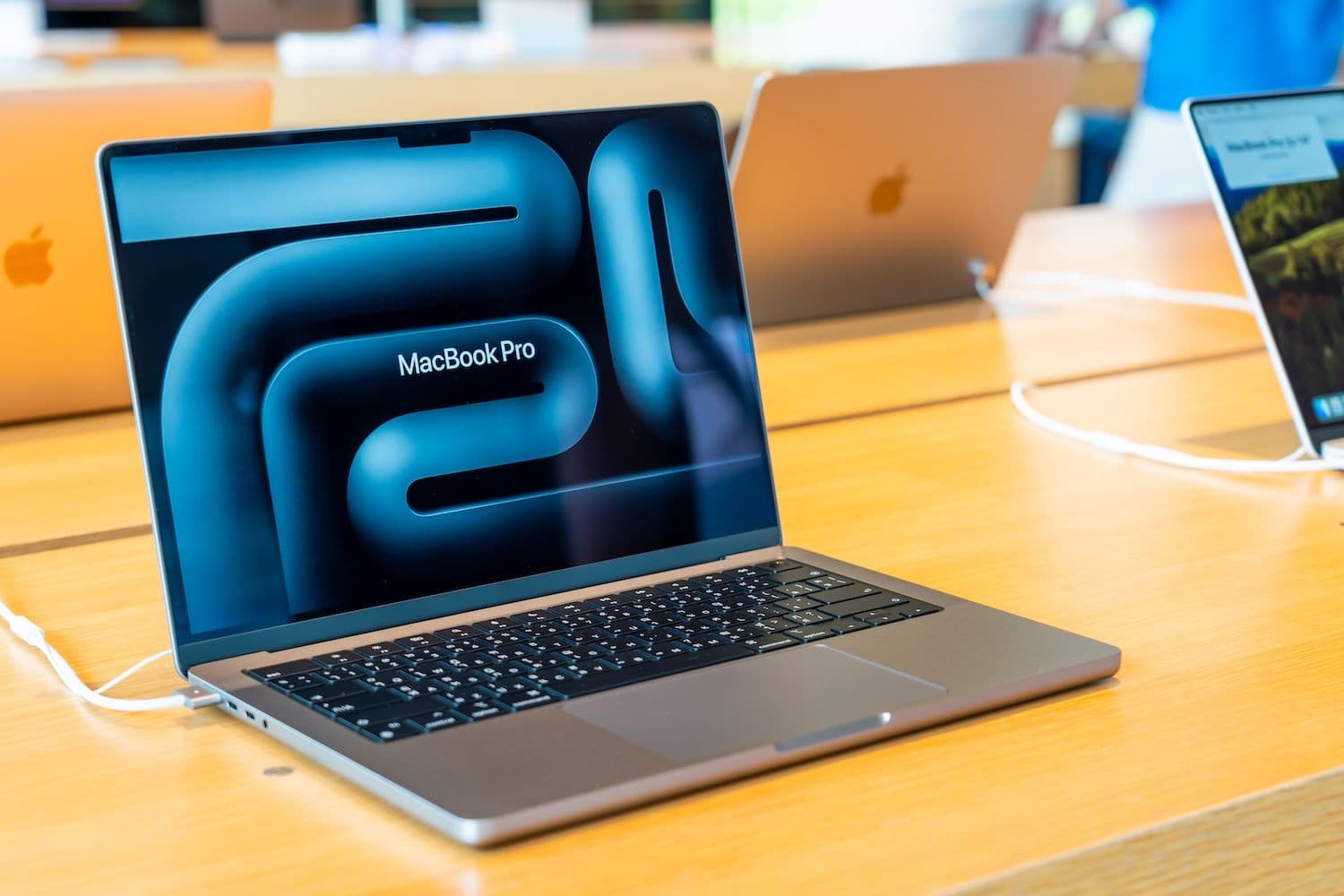
Apple is expected to unveil its first touchscreen MacBook Pro, fitted with an OLED display, at an Oct. 28 event in Los Angeles that the company confirmed Monday.
Key Points:
- The redesigned laptop is expected to pair an OLED touchscreen with a Dynamic Island and a lighter body.
- Reports point to the existing M5 Pro and M5 Max chips and a price above current models.
- Stores could start selling the machines on Nov. 6, roughly a week after the reveal.
Apple Launch Event
Apple marketing chief Greg Joswiak teased the gathering Monday in a social media post that read, "Can't wait to pro and tell next week." Invitations sent the same day asked reporters to attend "a special Apple Experience" in Los Angeles.
The 10 a.m. Pacific gathering will be Apple's third product event since John Ternus succeeded Tim Cook as chief executive. Apple did not name any products, and no traditional keynote is expected. Instead, the company will likely post press releases and videos while invited journalists try the devices in person, much as it did with its smart home lineup earlier this month.
Beyond the flagship laptop, Apple is also expected to show an entry-level 14-inch MacBook Pro and an iMac running its M6 chip, along with an iPad mini that has an OLED screen.
Bloomberg reporter Mark Gurman said last week that the new laptops could reach stores on Friday, Nov. 6. He tied the date to a large floor reset that Apple retail stores have planned for the night of Nov. 5. Pre-orders could open as soon as the day of the reveal.
Also Read: Bitcoin Holds $80,000: A Pause Before Challenging $87,000?
Touchscreen MacBook Design
The redesigned 14-inch and 16-inch models are expected to run on the same M5 Pro and M5 Max chips found in current MacBook Pros, rather than a new generation. The bigger change is the screen.
Reports describe a tandem OLED panel, which stacks two light-emitting layers for more brightness and contrast, in place of the mini-LED displays Apple uses today.
A small camera cutout with a Dynamic Island, the iPhone's pill-shaped status area, will reportedly replace the notch that has sat atop the MacBook Pro display since 2021. Gurman has also said the machines will be "significantly lighter."
Apple "reengineered the machine's interior, miniaturizing parts and rearranging components to make the computer much easier to carry," he wrote in his newsletter earlier this month.
The keyboard and trackpad stay. According to Gurman's earlier reporting, tapping a menu bar item will temporarily enlarge its controls, while other taps open menus near the user's finger. Scrolling and pinch-to-zoom are also planned.
Code in macOS 27 shows Safari already adjusting for finger input, and Apple has been testing the laptops on macOS 27.2, which reached developers as a release candidate Monday. Gurman has also reported a reinforced hinge to stop the screen from bouncing.
Reitzes, Gurman Views
Melius Research analyst Ben Reitzes told clients in a Monday note to look for new Macs this fall, "including a touchscreen notebook."
Apple has not announced pricing. The OLED models are expected to sit above the existing mini-LED MacBook Pros rather than replace them, and Gurman reported last year they would likely cost a few hundred dollars more than current versions. Research firm Omdia expects Apple to keep making today's mini-LED panels through 2028.
Gurman once floated "MacBook Ultra" as a possible name before walking it back, and the "Pro and tell" tagline suggests Apple will stick with MacBook Pro. Analyst Ming-Chi Kuo has said Apple could bring touch to other MacBook models if this one proves successful.
The machine would be Apple's first touchscreen Mac and the first full MacBook Pro redesign since the M1 Pro and M1 Max models arrived in 2021.
Apple has resisted touch on the Mac for more than a decade. In 2010, Steve Jobs called vertical touch screens "ergonomically terrible." The closest the company came was the Touch Bar, a thin touch strip above the keyboard that debuted on the MacBook Pro in 2016 and was phased out starting with the 2021 redesign.
Read Next: Crypto’s 39.6% Rally Has A Problem: Spot Buyers Aren’t Keeping Up